“TFM” Demonstrates Strong Growth Invests 300 Million Baht to Upgrade Aquafeed Production to Industry 4.0 Standards Amid Rising Demand for Shrimp and Fish Feed
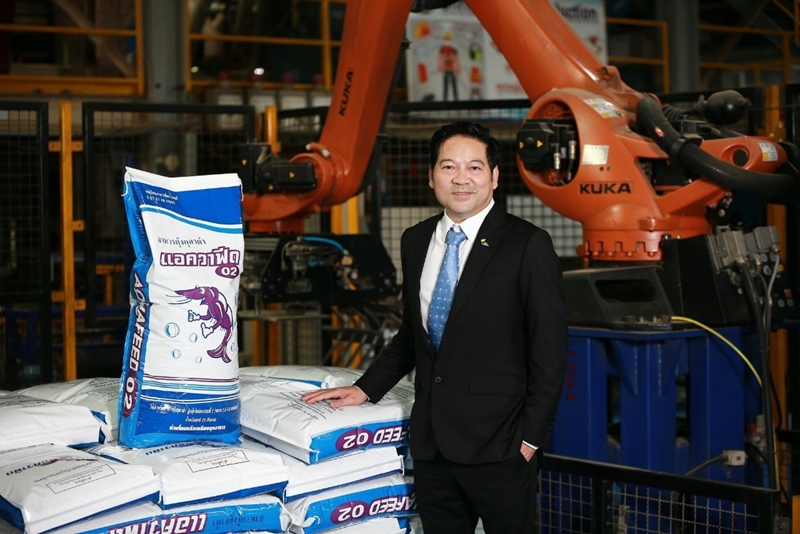
Bangkok - June 30, 2025 - Thai Union Feedmill Public Company Limited (TFM), a leading Thai producer and distributor of aquafeed and economic animal feed, has reported strong growth despite the economic slowdown. Sales of aquafeed increased in April–May 2025 compared to earlier in the year, driven by rising demand for shrimp and seabass feed. The company is investing over 300 million baht to enhance production efficiency and move toward Industry 4.0 standards. This includes upgrading shrimp and fish feed production lines, which account for 60% of total production capacity. The upgrades are expected to be completed and operational by August 2025 to support sustainable growth.
Mr. Peerasak Boonmechote, CEO of TFM, stated that the company’s sustainable aquafeed business strategy-focusing on quality, customer care, and continuous product development-has enabled TFM to maintain strong revenue and profit growth. Notably, aquafeed sales saw significant growth in April and May 2025, coinciding with the industry’s peak season. Compared to the same period last year, both shrimp and seabass feed sales have shown consistent improvement.
Shrimp feed growth has been supported by consistent high-quality feed, which has positively impacted shrimp farming results and increased feed usage. Additionally, expanding the customer base and collaborating with shrimp hatchery partners has helped TFM gain market share. Domestic consumption and exports continue to drive demand for shrimp feed.
For seabass feed, TFM has expanded its customer base, particularly in central Thailand, leading to steady sales growth. The seabass market demands feed that supports high-quality fish meat production, with a focus on reducing antibiotic use, minimizing residues, and enhancing nutritional value for optimal growth. To ensure long-term sustainable growth, TFM emphasizes innovation, sustainability, and feed efficiency.
To support this growth, TFM is implementing an ongoing investment plan. In 2025, the company allocated over 300 million baht, primarily for projects promoted by the Board of Investment (BOI). These projects aim to enhance production efficiency and feed quality consistency. The company also aims to reduce production costs by upgrading machinery to modern, precise automated systems and incorporating energy-saving technologies.
The investment includes four production lines: two fish feed lines at the Mahachai plant and two shrimp feed lines at the Ranot plant. Three lines involve changing existing machinery to modern automation, while one new line will expand shrimp feed capacity using the same automation technology. These upgrades will cover over 60% of total production capacity, improving efficiency, reducing costs, and advancing TFM toward smart manufacturing under Industry 4.0. All projects are scheduled for completion and operation by August 2025.
Despite ongoing economic uncertainties, TFM remains committed to investing in competitiveness and long-term growth, underscoring its strong financial position. Last year, the company generated 741 million baht in operating cash flow, compared to only 220 million baht in interest-bearing debt. This reflects efficient financial management, strong cash flow, high liquidity, and low debt. With excellent inventory turnover, TFM is well-positioned to pursue new investment opportunities that enhance business value sustainably.