TFM Highlights “Efficiency–Low Carbon” Strategy to Elevate Thai Shrimp to Premium Markets Adapting to the New Global Trade Landscape While Enhancing Cost Efficiency
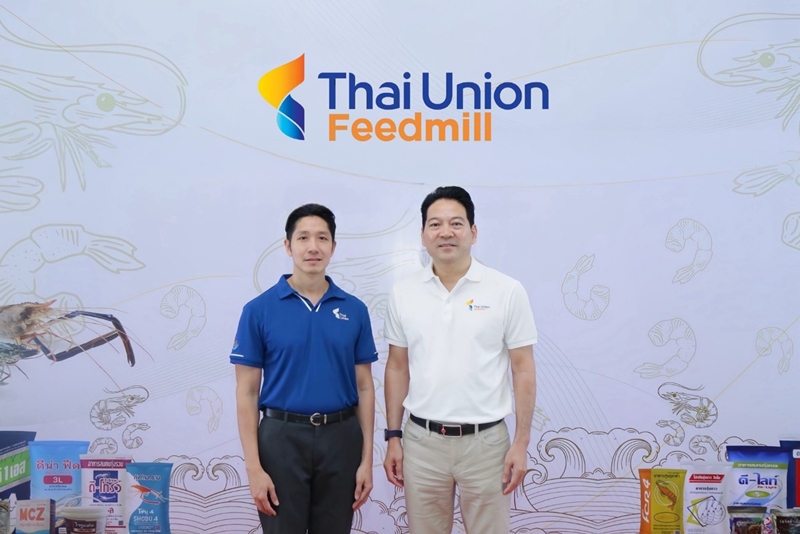
Thai Union Feedmill Public Company Limited (TFM) revealed that Thailand’s shrimp industry is undergoing a rapid transition toward sustainability amid pressures from the global economy, rising energy costs, and new international trade regulations emphasizing environmental responsibility. The company is focusing on upgrading production across the entire supply chain, adopting a low-carbon approach as a key mechanism to maintain competitiveness, while supporting farmers through aquafeed innovation and efficient farm management. This aims to create added value, elevate Thai shrimp to premium markets, and establish a foundation for long-term sustainable growth.
Peerasak Boonmeechote, Chief Executive Officer of TFM, shared at the “Thai Union Synergy 2026” event that the overall outlook for the shrimp industry in 2026 remains positive, driven by strong demand for high-quality products in the U.S. and European markets. However, the competitive landscape has shifted significantly. Operators can no longer rely solely on production volume but must prioritize cost efficiency per unit, farming productivity, and compliance with sustainability standards, which are becoming essential for market access.
“Today, the industry is no longer competing on who can produce the most, but on who can manage costs better and adapt to risks faster,” said Peerasak.
Another key factor to monitor closely is the rising price of key raw materials, particularly fishmeal. This makes cost management and productivity improvement increasingly critical for future business operations.
In response, TFM has outlined “Six Strategies for Success in the Shrimp Business in 2026” to help farmers and entrepreneurs adapt systematically:
- Understanding global markets and timing sales appropriately
- Aligning farming plans with market demand, especially shrimp size management
- 60–70 count shrimp: high demand in Asian markets and restaurants
- 20–30 count shrimp: suitable for premium and domestic markets
- Managing harvest timing in line with order cycles
- Efficient feed cost control
- Enhancing product quality and differentiation through Lower Carbon Shrimp
- Leveraging data and AI to improve farming efficiency and reduce hidden costs
- Strengthening collaboration (synergy) across the value chain in both production and marketing
On the sustainability front, Prach Kerdpairoj, Sustainability Director for pet food, aquafeed, and marine ingredients at Thai Union Group Public Company Limited (TU), stated that sustainability trends are clearly shaping the direction of the global shrimp industry.
According to a 2025 Life Cycle Assessment (LCA) study by the Global Shrimp Forum Foundation, greenhouse gas emissions in the shrimp industry come from three main sources:
- Feed production and sourcing (~41%), including raw materials such as fishmeal and soy
- Farming operations (~47%), the largest share, driven by energy use, water management, and waste
- Processing (~8%), covering collection, cold storage, and processing before reaching consumers
These findings highlight that shrimp farms and aquafeed are the most critical leverage points for carbon management across the supply chain.
TFM’s certification by the Aquaculture Stewardship Council (ASC) reflects its commitment to international sustainability standards, which are now a fundamental requirement for entering premium markets.
At the same time, major global retailers are tightening environmental requirements, prioritizing low-carbon and fully traceable products. In response, TU and TFM have continuously developed their “Low Carbon Shrimp” initiative. This includes improving feed formulations, sourcing deforestation-free raw materials, and supporting alternative energy adoption at farms—such as solar panel installations with no upfront investment—helping reduce both costs and greenhouse gas emissions.
The company is also expanding market opportunities by showcasing its low-carbon shrimp initiative at Seafood Expo North America in Boston, USA, where it received strong interest from international buyers and business partners.
Peerasak concluded that the transformation of Thailand’s shrimp industry is not merely a response to short-term challenges but a redefinition of future competitiveness. TFM is committed to supporting farmers in improving productivity, controlling costs, and creating added value, ensuring that Thai shrimp can compete and grow sustainably in the global market.