TFM Recognized in the ESG100 List for the Second Consecutive Year, Highlighting Its Low‑Carbon Shrimp Model to Elevate Thailand’s Shrimp Industry to Global Standards
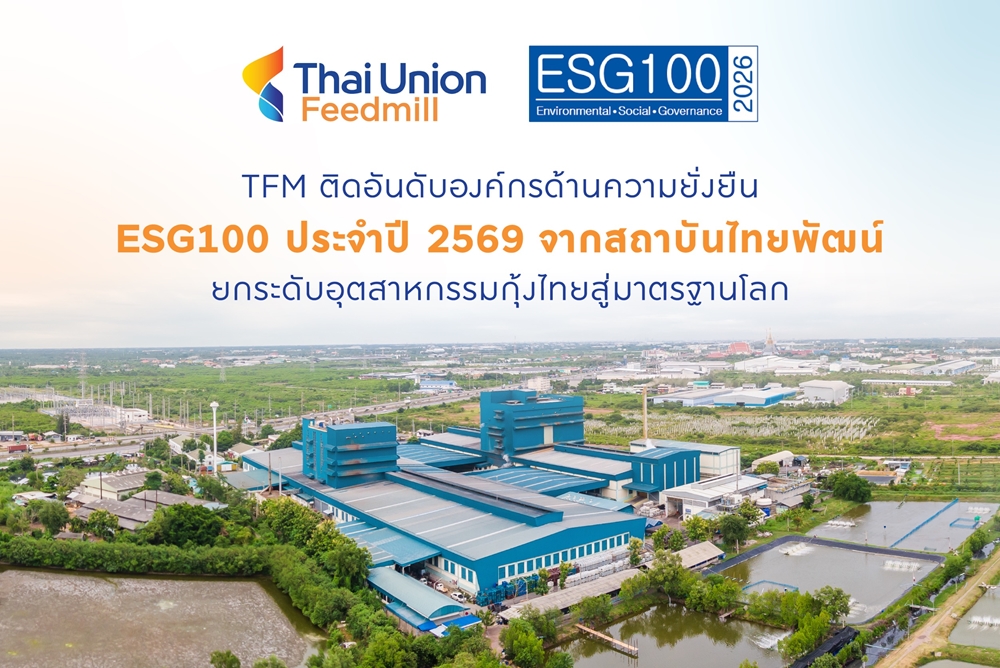
Thai Union Feedmill Public Company Limited (TFM) has been selected for inclusion in the ESG100 Universe for the second consecutive year by the Thaipat Institute, underscoring the Company’s strong commitment to ESG‑driven operations under its SeaChange® 2030 strategy. TFM continues to advance greenhouse gas reduction initiatives in shrimp farming to elevate Thailand’s shrimp industry, strengthen its global competitiveness, and support long‑term sustainable growth.
Mr. Peerasak Boonmeechote, Chief Executive Officer of Thai Union Feedmill Public Company Limited (TFM), a leading Thai producer and distributor of aquaculture and livestock feed, stated that being selected for inclusion in the ESG100 Universe for the second consecutive year reflects TFM’s strong commitment to integrating Environmental, Social, and Governance (ESG) principles into its business operations to drive sustainable growth. The Thaipat Institute evaluated 931 listed companies, funds, and investment trusts as part of its sustainability assessment.
For TFM, sustainability extends beyond minimizing the environmental impact of its operations. It also encompasses creating value and enhancing the competitiveness of Thailand’s shrimp industry across the entire value chain from shrimp farmers and feed producers to processors, exporters, and consumers in global markets.
Amid growing challenges posed by climate change, tightening environmental regulations, and rising global consumer expectations for responsible sourcing and supply‑chain transparency, TFM continues to advance its ESG initiatives to elevate production standards across Thailand’s shrimp industry in line with international market requirements.
One of the Company’s key initiatives is the “Shrimp Decarbonization Project” implemented in collaboration with the Thai Union Group under the SeaChange® 2030 strategy. The project promotes low‑carbon shrimp farming by supporting the use of deforestation‑free feed ingredients, adopting automated feeding systems, installing solar energy solutions on farms, and enhancing farming practices to meet global sustainability standards.
Within its operations, TFM continues to reduce environmental impacts through ongoing improvements in energy efficiency, the installation of solar power systems at its production facilities, the use of biomass as an alternative to fossil fuels, and investments in technologies and machinery that help lower greenhouse gas emissions.
In 2025, the Company invested more than THB 27.4 million in environmental initiatives, including biomass energy, solar power, high‑efficiency machinery, and upgraded air‑conditioning systems, resulting in a 23% reduction in greenhouse gas emissions per ton of production compared to the previous year.
Another key factor is TFM’s achievement as the first aquafeed producer in Asia to obtain the ASC Feed Certification, a globally recognized sustainability standard. This milestone reflects the Company’s capability to drive its ESG strategy into concrete action, covering everything from raw material sourcing and production to the development of a sustainable supply chain. These efforts strengthen the nation’s competitiveness and elevate Thailand’s shrimp and seafood industries to international standards.